Description
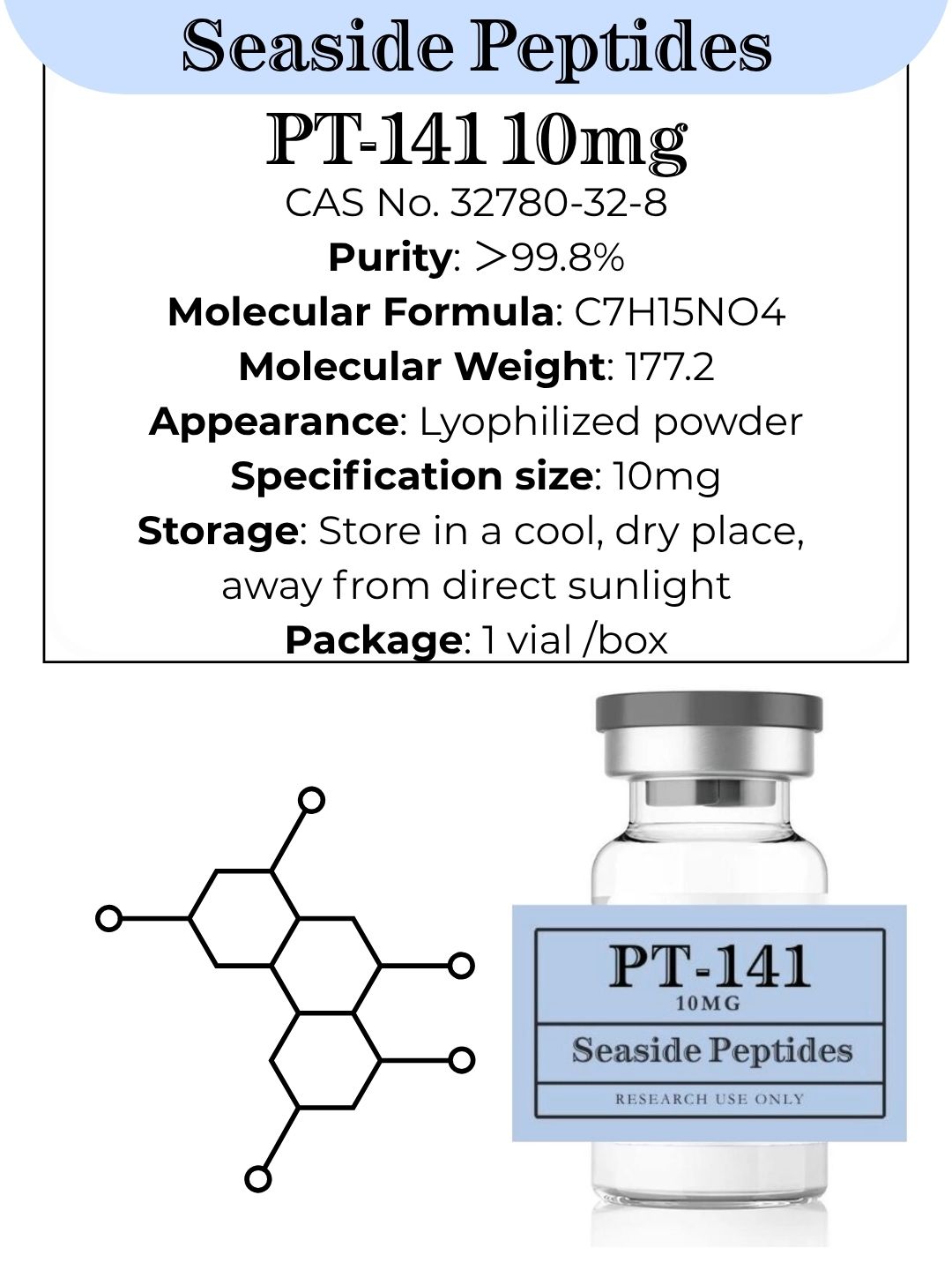
About PT-141 (Bremelanotide) · 10 mg ·
Also known as Bremelanotide, PT-141 is a synthetic peptide developed from Melanotan II. This potent peptide is widely studied for its potential in enhancing sexual function and desire.
Key Features:
– Mechanism of Action: PT-141 works differently from other related compounds by activating melanocortin receptors in the brain, which are associated with sexual arousal and desire.
– Potential Benefits: Extensive research has indicated that PT-141 may aid in addressing issues related to sexual dysfunction, offering a new avenue for exploring solutions to this common concern.
– Quality and Purity: Our peptides are synthesized to the highest standards, ensuring exceptional purity and consistency for reliable research outcomes.
Research & Clinical Literature (RUO)
Early PT-141 (Bremelanotide) studies — preclinical
Initial work in murine models examined how melanocortin receptor engagement might relate to appetitive sexual behaviors. Investigators observed increased solicitation behaviors without broad motor activation, consistent with a central, receptor-specific effect noted across different testing contexts.
Melanocortin receptors & neural pathways
PT-141 is a melanocortin receptor agonist (MC4R focus, MT-II lineage). Preclinical and review articles discuss MC-system roles in central processing and appetite/energy regulation, providing a mechanistic backdrop for neural signaling studies.
Cavernosal pressure models (preclinical physiology)
In anesthetized animal preparations, melanocortin agonism has been associated with cavernosal pressure changes consistent with neuronal nitric-oxide (NO) involvement. Antagonist experiments (e.g., SHU-9119) and NO-pathway inhibition (e.g., L-NAME) reduced these effects, suggesting an MC-linked, NO-dependent mechanism in model systems.
CNS mapping & regional specificity
Experimental work using central administration and mapping of hypothalamic/limbic regions (e.g., mPOA) reported patterns consistent with behavioral and neuroanatomical specificity in models enriched for reproductive hormones. Authors describe selective facilitation of appetitive endpoints without generalized motor effects.
Human imaging & psychometric endpoints (methodology)
Randomized, double-blind, placebo-controlled crossover designs in clinical research report MC4R agonism associated with changes in sexual brain processing (e.g., activity/connectivity shifts in cerebellar/supplementary motor areas, amygdala–insula coupling) and short-term desire ratings vs. placebo. These studies are methodological/observational and do not imply product use.
Pharmacology context & selectivity
Review and pharmacology sources outline MC4R/MC1R methodology, GPCR second-messenger signaling (cAMP/PKA/CREB, ERK/MAPK), and β-arrestin/internalization readouts—typical endpoints for receptor selectivity and PK/PD characterization under laboratory conditions.
Compliance: Research Use Only (RUO). Not for human or veterinary use. No dosing, administration, compounding, or medical guidance is provided or implied.
References (selection)
-
Pfaus J. et al. Bremelanotide: preclinical CNS effects… J Sex Med. 2007.
-
PubChem (CID 9941379): Bremelanotide entry.
-
Molinoff P. et al. PT-141: melanocortin agonist… Ann NY Acad Sci. 2003.
-
Renquist B. et al. Physiological roles of MC3R. Eur J Pharmacol. 2011.
-
Adan R. et al. MC4R and appetite control. Br J Pharmacol. 2006.
-
Pfaus J. et al. Selective facilitation in female rat. PNAS. 2004.
-
Vemulapalli R. et al. MC agonists & NO-dependent cavernosal pressure. Br J Pharmacol. 2001.
-
Thurston L. et al. MC4R agonism & sexual brain processing (fMRI). J Clin Invest. 2022.
GrillSmokeBbqAL –
Made for a great weekend anniversary trip, and does exactly what it is supposed to. Thanks for the Bac Water free gift.
Dawn –
This is how Stella Got her Groove Back- I didn’t realize what I was missing. Shipped quick in plain packaging, great product. Have asked for a quote for 10 vials, they sent and gave me discount. Solid company, and shipped quick.