Description
Research on the Glow 70 (GHK-Cu | BPC-157 | TB-500 Blend)
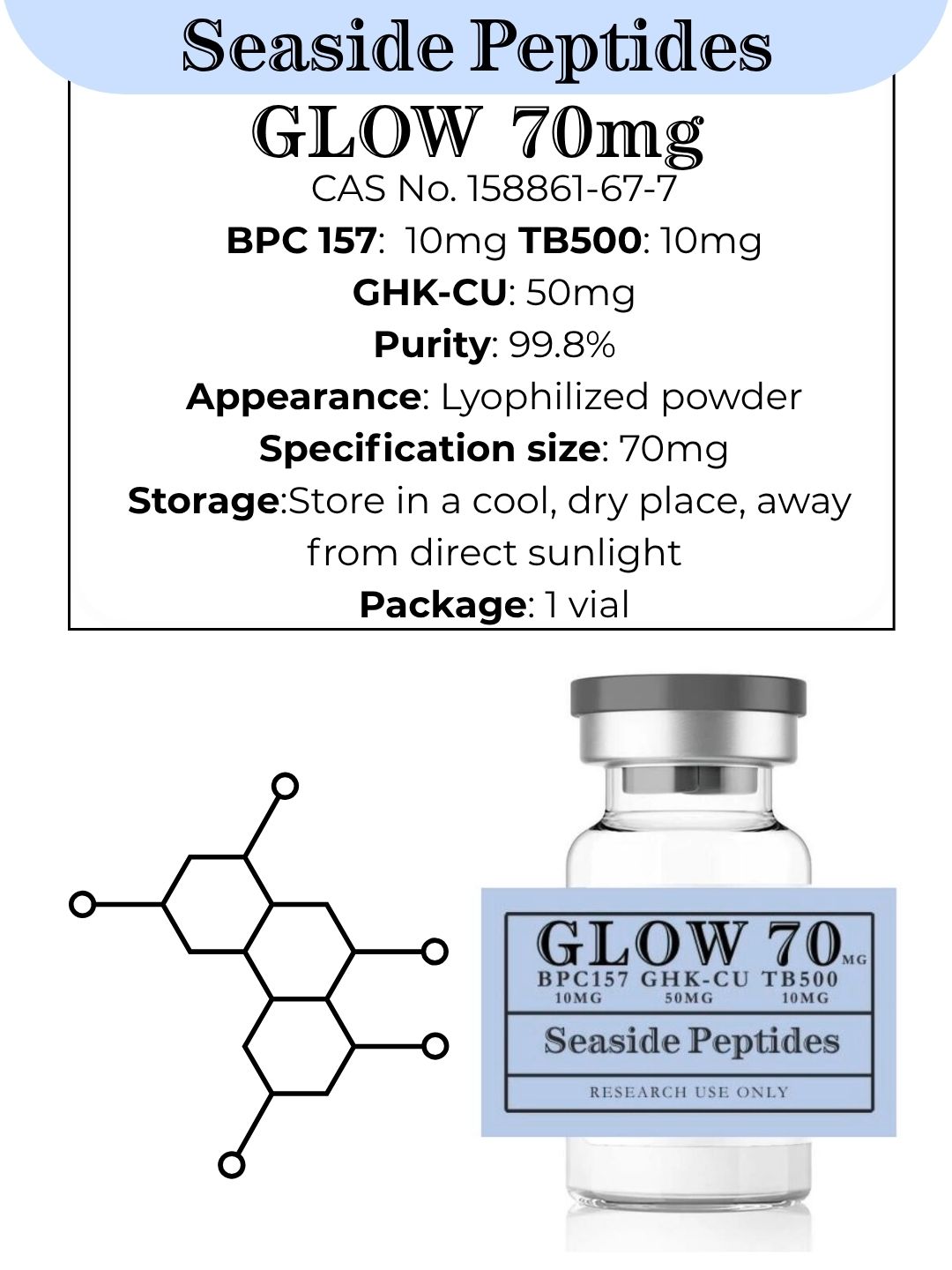
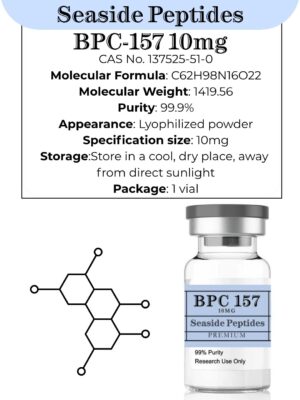
Glow research peptide blend (RUO): BPC-157 10 mg, GHK-Cu 50 mg, TB-500 10 mg. ≥99% HPLC purity
-
Wound Healing and Tissue Repair
GHK-Cu promotes fibroblast activity and collagen synthesis, accelerating tissue remodeling [1].
BPC-157 has shown efficacy in models of muscle, ligament, and tendon repair [2].
TB-500 supports actin binding and cell migration, both critical to efficient healing [3].
-
Anti-Inflammatory Actions
GHK-Cu reduces levels of pro-inflammatory cytokines like TNF-α and IL-6 [1].
BPC-157 has demonstrated the ability to suppress inflammation in models of soft tissue and GI injury [2].
TB-500 exhibits anti-inflammatory effects, aiding in recovery from muscular and connective tissue injuries [3].
-
Angiogenesis and Blood Flow Enhancement
GHK-Cu and TB-500 stimulate vascular endothelial growth factor (VEGF) expression and angiogenesis [1][3].
BPC-157 contributes to improved blood vessel regeneration and perfusion, enhancing the healing process [2].
-
Skin Health and Anti-Aging
GHK-Cu has been shown to improve skin elasticity, reduce fine lines, and stimulate dermal regeneration [1].
While BPC-157 and TB-500 are not primarily studied for dermatological effects, their systemic healing properties may complement skin health [4].
-
Gastrointestinal Protection and Healing
BPC-157 has been extensively researched for its role in protecting the gastrointestinal lining, including reducing ulcer formation and accelerating intestinal repair [2].
GHK-Cu and TB-500 may support these effects through modulation of oxidative and inflammatory pathways [1][3].
Glow — Research Notes (RUO)
Composition: BPC-157 10 mg + GHK-Cu 50 mg + TB-500 10 mg (total 70 mg)
Supplied as a lyophilized vial (≥99% HPLC purity; LC–MS identity). For laboratory research only.
Tissue & ECM research signals
In preclinical models, the Glow blend components (BPC-157, GHK-Cu, TB-500) have been investigated for roles in extracellular matrix (ECM) dynamics and structural markers (e.g., collagen I/III, fibronectin, decorin), providing reference data for tissue remodeling endpoints.
Inflammation pathway exploration
Laboratory work has explored effects on inflammatory markers and signaling (e.g., NF-κB–related readouts; cytokine panels IL-1β/IL-6/TNF-α), supporting studies of resolution pathways under controlled conditions.
Dermal barrier & epidermal models
Model systems have examined barrier-integrity measures—TEER, tight-junction proteins (occludin/claudins), and cornification markers (filaggrin, involucrin)—to evaluate epidermal homeostasis and barrier recovery in vitro.
Angiogenesis & endothelial assays
In-vitro assays have studied endothelial tube formation, migration, and nitric-oxide/endothelial readouts, which are common vascular biology endpoints relevant to dermal microenvironment research.
Oxidative stress & cellular protection
Bench studies have assessed responses to oxidative challenge (ROS assays; SOD, CAT, GPx activity; Nrf2-pathway markers) to characterize oxidative-stress handling in relevant skin/ECM model systems.
Tendon/soft-tissue model context
Preclinical literature describing BPC-157 and TB-500 separately has evaluated tendon/ligament and soft-tissue endpoints (e.g., fibroblast migration, actin-related cytoskeletal markers, MMP/TIMP balance) in cell and animal models.
Compliance: Research Use Only (RUO). Not for human or veterinary use. No dosage or administration guidance is provided or implied.
Representative research areas to cite (blend-appropriate)
-
ECM/dermal biology reviews (collagen I/III; MMP/TIMP; 3D skin equivalents).
-
Inflammation methods (NF-κB reporters; cytokine ELISAs).
-
Barrier integrity (TEER; tight-junction proteins; keratinocyte–fibroblast co-culture).
-
Angiogenesis protocols (HUVEC/HMVEC tube formation; migration assays).
-
Oxidative-stress frameworks (ROS challenge; antioxidant enzyme panels; Nrf2 markers).
-
Tendon/soft-tissue models (fibroblast migration; actin/cytoskeletal signaling; matrix deposition).
Referenced Citations
- Pickart L, Margolina A. Regenerative and protective actions of the GHK-Cu peptide. Int J Mol Sci. 2018;19(7):1987. PMID: 29966494
- Sikiric P et al. BPC 157: From gastric peptide to organoprotection and healing. Curr Pharm Des. 2018;24(18):1982–2003. PMID: 29788856
- Goldstein AL et al. Thymosin beta 4 and angiogenesis: More than a cytoskeletal protein. Ann N Y Acad Sci. 2007;1112:171–180. PMID: 17947586
Reviews
There are no reviews yet.